June 4, 2026 | By ToolCrush
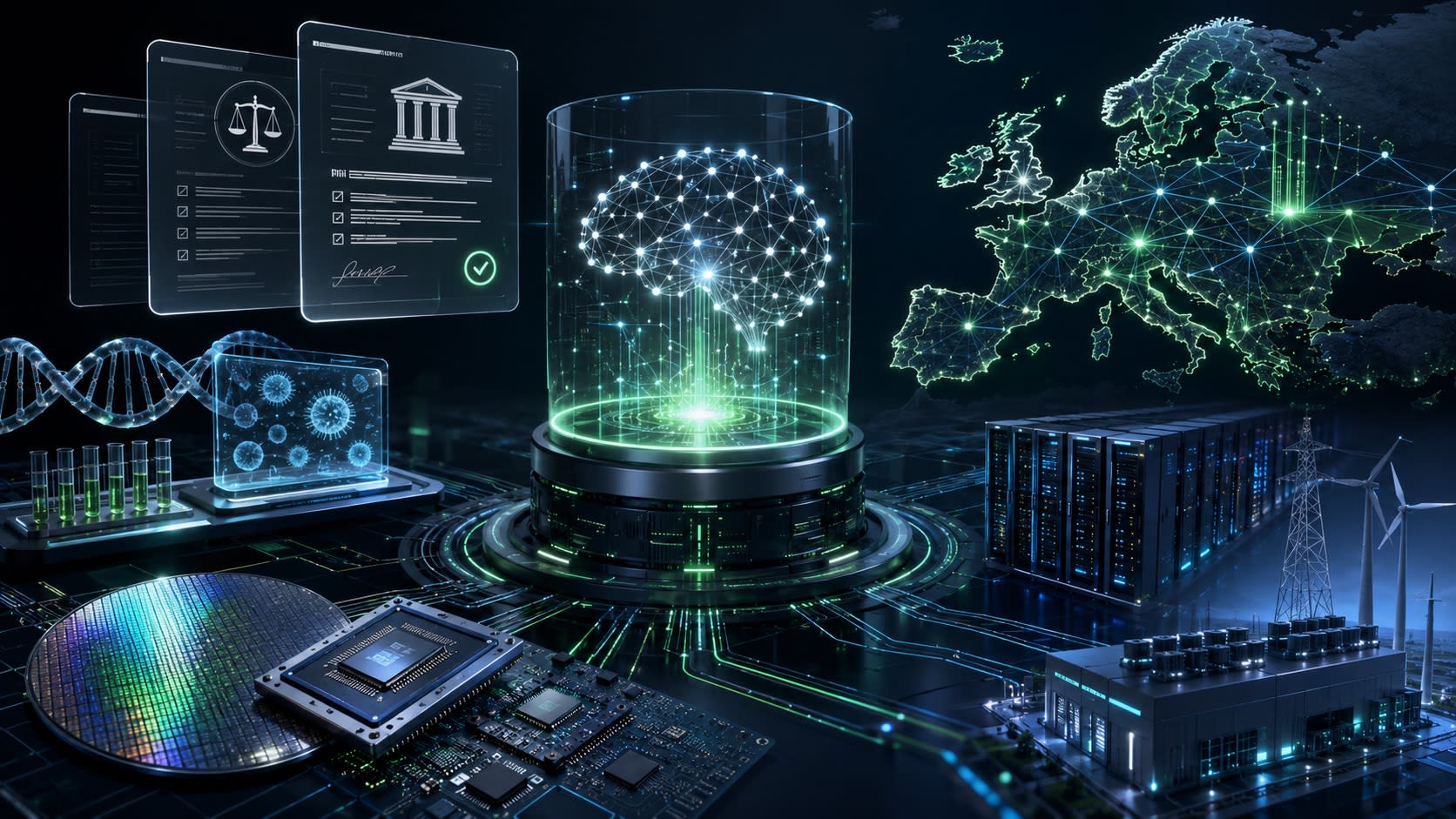
Today’s AI news is about control. OpenAI wants government testing money but not mandatory model approvals, major AI labs are backing biosecurity rules, TSMC says AI chip demand is still not slowing down, and Europe is trying to reduce dependence on foreign cloud, AI, and chip infrastructure.
This is not a normal product update day.
This is AI turning into policy, biology, chips, and sovereignty all at once.
OpenAI: Altman pushes back on model approvals
OpenAI CEO Sam Altman is urging US lawmakers not to require government approval before companies release new AI models. OpenAI is arguing for more public funding for AI testing, including cybersecurity, biological risk, and national security expertise, but does not want a formal pre-approval system that could slow model launches.
This is the exact tension AI policy keeps running into. Everyone wants safer frontier models, but the largest AI companies do not want the government holding the launch button.
ToolCrush take: OpenAI’s position is predictable and strategically smart. The company wants stronger testing infrastructure, but it does not want Washington turning model releases into a permission-based process.
AI labs: Biosecurity screening gets serious
Leaders from OpenAI, Anthropic, Microsoft AI, and Google DeepMind signed a letter supporting mandatory screening for synthetic DNA and RNA orders. The concern is that advanced AI could lower the barrier for designing dangerous biological materials, making gene synthesis screening more urgent.
This is one of the clearest examples of AI safety moving beyond abstract debates. The risk is not just that a chatbot says something wrong. The risk is that AI makes dangerous scientific knowledge easier to use.
ToolCrush take: This is the kind of AI regulation that actually makes sense. If models can help design biological threats, then screening the physical supply chain around DNA and RNA synthesis is a practical safety layer.
TSMC: AI chip demand keeps climbing
TSMC said AI demand is still extremely strong and that it is working hard to avoid becoming a bottleneck in the semiconductor supply chain. The company also said it would like to raise prices because supplier and upstream costs are increasing, although it does not want sudden price shocks.
This is the boring story that keeps becoming the biggest story. Every new AI product depends on chips, memory, packaging, power, and manufacturing capacity that most users never see.
ToolCrush take: AI still looks like software from the outside, but the real race is physical. If TSMC cannot produce enough advanced chips, the entire AI industry feels it.
Europe: Made in Europe AI push grows
The European Union is pushing harder to reduce dependence on foreign technology providers across cloud, AI, and chips. The broader goal is to build more European control over critical digital infrastructure instead of relying too heavily on US and Chinese technology.
This fits the same pattern we have seen with Mistral and sovereign AI. Europe does not want to be only a customer in the AI race. It wants more control over the stack.
ToolCrush take: Europe’s challenge is execution. Wanting local cloud, AI, and chip capacity is easy. Building competitive alternatives to American hyperscalers and frontier labs is much harder.
Data centers: AI power use faces more scrutiny
The EU is also preparing energy standards for data centers as AI infrastructure pushes electricity demand higher. That matters because AI growth is no longer just a compute problem. It is also becoming an energy, climate, grid, and construction problem.
This is the infrastructure shadow behind every AI launch. Faster models and smarter agents are great, but they require huge amounts of power and physical data center capacity.
ToolCrush take: AI companies love talking about intelligence, but the next bottleneck may be electricity. The winners will not only have the best models. They will have access to power, chips, land, cooling, and regulation-friendly infrastructure.
Today’s bigger picture
The pattern today is clear: AI is becoming too important to stay inside product demos.
OpenAI is fighting over who controls model releases. Major AI labs are backing rules around biological risk. TSMC is warning that AI chip demand keeps putting pressure on the supply chain. Europe wants more control over cloud, chips, and AI infrastructure. Data centers are becoming an energy policy issue.
That means AI is now a full-stack political and industrial system.
For creators and marketers, the lesson is simple. The tools you use are downstream from much bigger forces: model regulation, chip supply, cloud infrastructure, data center power, and national policy.
For founders, the lesson is even clearer. Building on AI means building on an unstable but fast-moving stack. Your product may depend on model access, pricing, latency, regulation, and infrastructure decisions you do not control.
That does not mean you should avoid AI.
It means you should understand the layer underneath your tools.
Today in one sentence
Today AI looked less like software and more like critical infrastructure, with OpenAI fighting model approval rules, AI labs backing biosecurity screening, TSMC managing chip demand, and Europe trying to build more control over the stack.
More tomorrow. Browse the ToolCrush directory for the AI tools behind today’s biggest stories.